One of the few compliments I have ever genuinely been able to accept is one I received from a coworker during my time in retail management. She was a woman in her late forties, a mortician who split her life between Pennsylvania and Alaska. On a Wednesday at four o’clock in the middle of a school year, the store was empty apart from myself and the mortician. After jotting down our less-than-desirable sales for the previous hour, I stepped out from behind the register and weaved between display tables to the front of the store, where she was refolding a stack of jeans and quietly humming. I’d heard about her and what she did for work, but had only seen her in passing, usually while I was scurrying out the door and she was just arriving. If I hadn’t hated the job and made it a goal to spend no more time there than what was absolutely necessary, I suspect we would’ve shared more than a quick smile and a barely-there nod. Now, given the opportunity, we exchanged courtesy introductions and got to talking, and she told me that she went to mortuary school in the city, and now did some teaching in Alaska. I played ignorant, like this information was new to me and not something I’d kept safely stored in my mind, next to the hope that one day I’d get to hear her elaborate on it. She’d spend about two months at a time in Alaska and then come back to this job and her husband. I wanted to ask how attached she was to him. I wanted to poke and at prod her mind, to ask her to share everything with me. What made her choose her career path? What does she think happens when we die? Was she nervous to embalm a body for the first time? What does it feel like in her own body? Her voice was confident and smooth around the edges, not a whisper, but quieter and more sincere in tone than I’d expected, and I wondered if that was how she sounded when she talked about everything she was passionate about.
I told her how admirable I found her work to be, that I specifically admired the guts it took to be so involved in people’s grieving process, that I’d personally been interested in the profession, and then she looked me up and down and said I’d make a good funeral director, because I’d look good in a suit. I don’t think I hid my blushing very well, and I definitely didn’t hide my smile, which only got wider as I thanked her. I tried to think of something else to say, something to signal that I didn’t want our conversation to come to an end. I wanted to ask her if I could rest my feet in her lap while we sat in the office chairs in the back room, if she’d place her hands on my ankles and drag a thumb across the fabric of my jeans in light, slow strokes.
A man walked into the store. The mortician greeted him with her sweet customer service voice, gave me a parting, apologetic smile, and diverted her attention from me. I watched from afar, preparing for closing, business as usual, as she showed the man three pairs of jeans, and thought that I really must be losing it.
My turn was coming up and though I’d been sorting through the files in my brain for however long it took to get to me, it seemed impossible to conjure up an answer, as if everything had been written in invisible ink and was useless to me without black light. The seventh graders on the cheer team sat together at lunch, in a circle at one of the round tables in the cafeteria, where suddenly everyone’s eyes were locked on me. Someone had had the idea to go around the table and have all of us share the name of the boy we liked. I knew I could lie, but creating the lie became more and more difficult considering I was the last person to be asked, so I couldn’t take the easy way out by naming one of the popular boys on the football team. They’d already been mentioned. So they asked me, “Emma, what about you, who do you like?” And I sat there feeling like a fool and said that I didn’t know, I didn’t really have a crush on anyone. That wouldn’t fly, so the girls started listing names of cute boys, swim team boys, less desirable football boys, soccer boys, boys who went on ski trips in the winter. They continued until the captain of the cheer team finally exclaimed that she knew who I’d look good with, what about Nick? All of the girls agreed, said he’s funny, he’s sweet, and I nodded, wide-eyed and dry-mouthed with a forced smile, silently begging God or whoever to ring the bell.
I didn’t understand why girls liked boys. At that time my most recent experience with one had been with Paul, a boy in my grade who liked to closely follow girls up the stairs, making it known that he was staring at their ass the entire time. He especially liked the girls in yoga pants, the cheerleaders or the softball players, the girls whose moms let them shop at Victoria’s Secret. When he tried with me, just once, I told him it wasn’t going to happen, nuh-uh, and stood still until he let out an exasperated laugh that reeked of slight defeat but a disappointedly unbruised ego, and walked ahead of me, smiling. My bra and underwear were from Justice. Everyone knew that he did this, had known for years, actually, but his father coached the football team so no one ever stopped him. But yeah, sure, boys could be nice, too. In the third grade I’d been asked out by a nice boy. I was caught off guard and felt nothing towards him, so I told him no, sorry, but he could pretend that we were dating, like tell his friends and stuff, if he wanted. He didn’t accept my offer, understandably, and later that year I nearly drowned at his pool party. Karma, maybe, but undeserved.
Despite these experiences it took me until the beginning of 2024, just after my twenty-first birthday, to realize I’m a lesbian. The only issue with that was that I’d been out as bisexual since I was fifteen—I wrote a letter to my parents and everything—which allowed them to cling to the hope that one day they’d have grandchildren, even though I’d been saying for ages that I don’t want kids. The first person I told was my therapist, who didn’t seem at all surprised. She just smirked, looked at me funny and said she was happy for me. There was a sense of freedom that came with understanding myself more, a kind that made me want to rebel. I felt radicalized, or on the cusp of becoming so. I started acting gayer, which means that I stopped shaving my armpits all the time and never wear a bra. In a way, these changes provided me with a sense of autonomy, something I was desperate for, as I was terribly depressed and hated my job, life, and a few other things. I wrote a list but I lost it. I liked having a secret, something that was mine and that I had the power to share or not to share, but eventually I felt suffocated by it, by realizing that the freedom was quite restricted, so, hold on, was it really freedom at all?
After a mental breakdown that nearly put the final nail in the coffin, I moved back in with my parents, so I couldn’t spend all day naked anymore—which I’d loved doing and would recommend to anyone wanting to become more comfortable existing in their own body—but I also wasn’t paying rent. You win some, you lose some. The first few months, from July to October, were awful. After The Awful I found a new therapist and got medicated. The Prozac made me start to feel like a whole person, like my mind and body were connecting for the first time. Two months later with my developing sense of self and around $850—I’d taken out my retirement fund—I booked a trip to upstate New York. I’d read a book set there, heard that the place was pretty gay, and craved reinventing myself, so what the hell, why not go? I spent two nights there and felt as if I’d been baptized and possibly reborn, but the religion wasn’t really a religion at all, it was community. It was real freedom.
Leaving was like pulling teeth. Blood and spit and tears dripped down my chin the entire drive home and I didn’t have any tissues, so I sat there and wallowed in it, let it drip onto my jeans. I only made two wrong turns. When I got back home, I cried on and off for days until my mother asked me what was wrong. Standing in the kitchen and cooking pasta for lunch, I told her I really liked the person I became on my trip, that I didn’t know I could feel like I did, so full of possibilities. I felt shiny and new and accepted. Getting straight to the point, she said, “So what are you telling me, that you’re gay?” With my head down I mindlessly stirred the boiling water and told her yeah, I guess I am, and thought to myself that she should’ve figured as such based on my continuous need to watch Killing Eve just one more time. She seemed slightly offended that I hadn’t told her sooner and said I should talk to my therapist, that I should tell her I want to feel the way I felt in New York at home, too, and that she supposed she wasn’t getting grandchildren.
A few weeks later, I got a job as a cleaning lady—I’d quit my old job right before I moved back home (remember the mental breakdown)—and noticed a change in my style and how I carried myself. I had a reason to work. I wanted to make money and get the fuck out of dodge, to go back to New York. At first when I was cleaning I imagined it was shame that I was scrubbing off countertops and dusting from chandeliers. I’d then vacuum it all up and toss it in the trash. When I worked alone I could even stomp on the bag a bit or throw it at the ground repeatedly. I started reading again and committed to writing (almost) every day. Sometimes it’s as though I’m on a high. Sometimes I am high. I could just be riding that now, but I don’t think so. I feel permanently changed and I’ve never been less suicidal in my life. In three weeks I’ll be driving to New York again, and with each passing day I become more eager to be the person I am when I am there.
I’m making a conscious effort to be unashamed of my existence. I dress how I like to and manspread on the loveseat at therapy. I wear lipstick and a bare face, I grew out my bangs. I picked up painting. I write about myself and don’t feel sick when I do so, but I’m done for now, I have a book to read and a trip to plan for. I have a person to be.
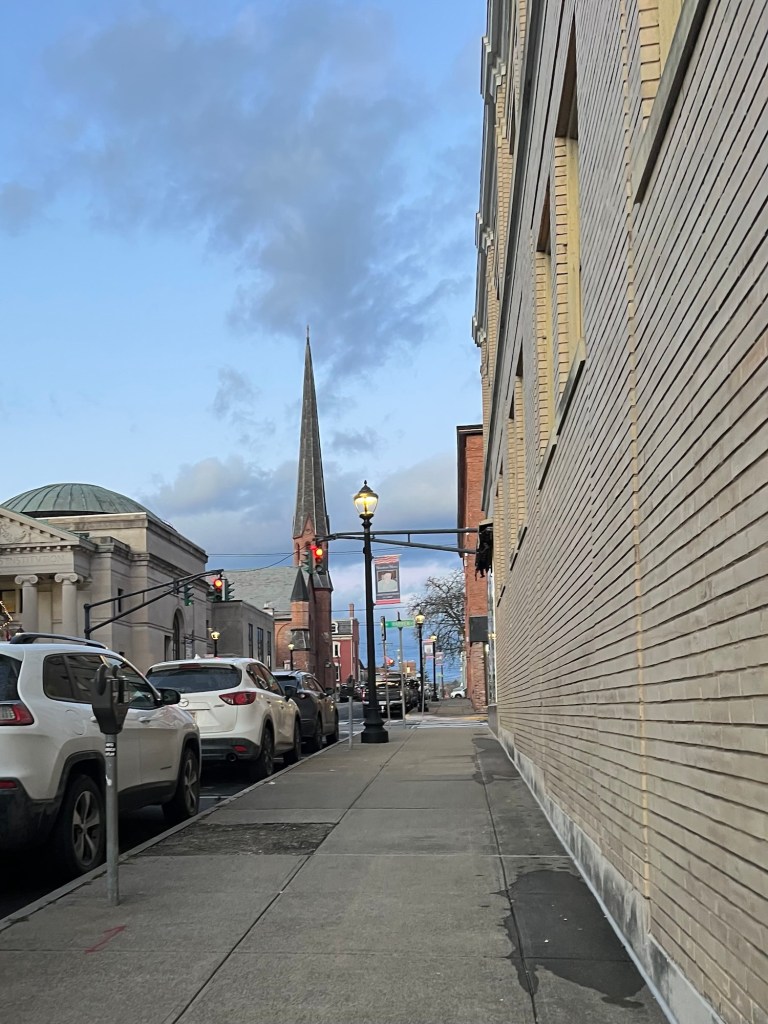
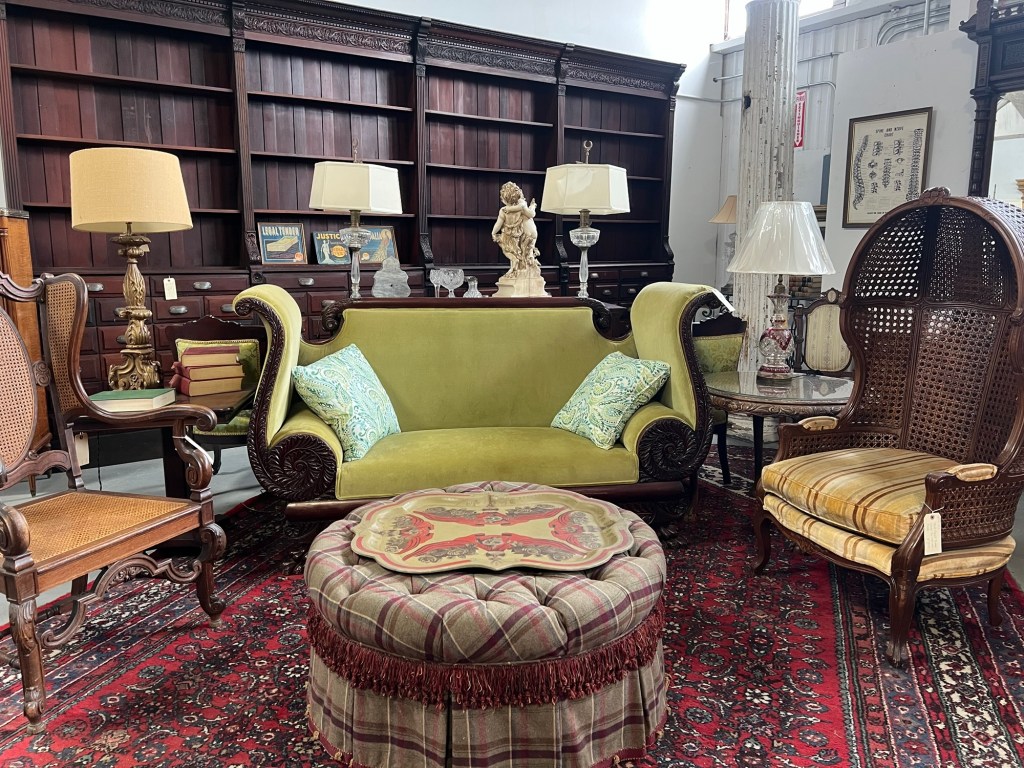
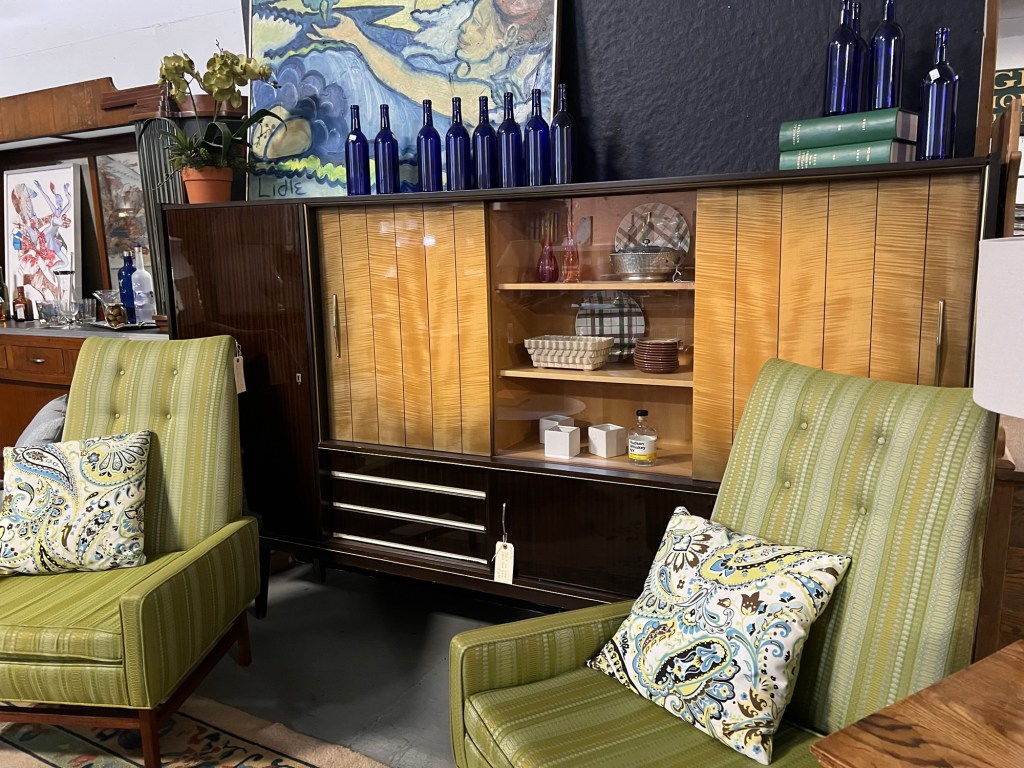
I’d been in and around town for seven hours, two of which were spent at an antique warehouse where I stared at the largest and most expensive vintage furniture I have ever seen, and sifted through racks displaying gorgeous coats, jackets, and blazers. My only plan for Thursday was to return to Spotty Dog, the charming and welcoming independent bookstore-meets-bar on Warren Street, the main drag of Hudson, New York. Oh, and if you needed art supplies, you could find them there, too. There was one more book I wanted to grab before I drove home the next day. I left with two books, two stickers, a wine buzz, and a new friend.
I didn’t recognize the employee, the same person working during my stop there the night prior, until I sat my items down at the checkout counter. I said hi in the way a person would greet an old, distant friend they hadn’t seen in years, like I expected the unreasonable fondness to be reciprocated. Mentally, I reminded myself that I was a tourist and then asked if they had rosé, and of course they had rosé, I read it right there, “ROSÉ,” written in pink on the massive chalkboard on the wall, you can’t miss it. And no, thanks, I don’t need a bag, but I’ll take a glass. I sat at the bar in what I considered to be the less awkward choice of the two available seats and kept my gaze forward.
It had taken some convincing to sit down, all internal, and the push/pull of assumed outcomes was a charade I was tired of entertaining. Leaving Spotty was the more comfortable option. I wouldn’t be perceived by the locals at the bar and left trying to gauge their opinions of me, the obvious tourist who seemed to be alone. To sit down and adjust myself on the tall wooden chair was to open myself up to a new experience. Plus, I’d avoid the dreaded fear of missing out, which would have left me feeling empty and subconsciously disappointed in myself.
The beer on tap, if I remembered correctly from my Instagram stalking, was all from small breweries, some of which were local, and the labels for each one were hand drawn in a variety of bright colors. I wanted to study them but also avoid looking too interested, too out of place. I’d given up on staring straight ahead and glanced to my right. There were stickers and other novelties on a table next to shelves containing an array of gay books, feminist books, and books about tarot reading. I tried settling into the comforting truth that Hudson was filled with people who, believe it or not, didn’t sit down at the bar with the intention to think poorly of me. They wanted a drink and a good time, just as I did.
The man to my left appeared to be in his mid to late fifties, had a full head and beard of salt and pepper hair, and when he turned to me to say something, I was met with kind eyes. On my head was a black newsboy cap with cat hair on it that I hoped wouldn’t be too visible in the warm lighting. I wanted to take it off so that I could appear at least somewhat relaxed and open to conversation, but I was unaware of the state of my bangs and wasn’t going to risk hat hair. When the bartender sat my glass of wine in front of me, I became present.
“Let me guess, you’re from the city,” the man said, meaning New York City, and God, no, I wasn’t from there. If I were, I’d have moved here long ago.
“I’m from Pennsylvania, about an hour from Pittsburgh,” I shared. He asked if I sneezed, would it hit Ohio?
“If I sneezed, in about an hour it would hit Ohio,” I replied.
“So, what brought you here?”
This would be where I revealed myself to be crazy, or at least seem more spontaneous than I actually am. Unable to lie, I explained that I’d read Big Swiss, the horny, gorgeous, deranged, and quite gay novel by Jen Beagin, a local author, and thought it’d be fun to visit. He said the author, referring to her by first name, comes here often, and they still have the poster from her reading, it’s up there, do I see it? He looked to the very top of the first set of bookshelves on the wall to his right, my left.
“It’s not exactly like the book,” he said, in reference to Hudson.
In Big Swiss, Hudson is practically its own character. It’s vibrant and sometimes (or all of the time) ridiculous, gossipy, full of antiques, gays, antique gays, gay restaurants, coffee shops, hair salons, etc. On the weekends, people came up from the city to ooh and ahh at the storefronts of Warren Street while they contemplated purchasing a second house there, just to, you know, get out of the city for a few weeks a year.
I said something about hearing that those who call Hudson home understandably aren’t fond of tourists, and that I wanted to avoid the rush of city people, which is why I’d planned my trip to be from Wednesday to Friday. I worried that I sounded uptight, but further into our conversation, the man deemed me a “real person,” even as a tourist, which I took as a compliment as well as a rite of passage to come back to Hudson in the future.
My glass was still a quarter full, I’d been drinking on an almost empty stomach. Not my best idea, but the wine loosened me up and I was loving it. In my slightly inebriated state of being, I mentioned that I should really eat, but I’m vegan, annoyingly picky, and anxious to go anywhere alone. Table for one. I mean, what a loser!
The man’s friend, sat to his left, showed my new friend something in the book he was reading. I thought it would be helpful to learn names.
In perfect timing, my friend turned back to introduce me to his friend.
“And this is..,” he waited for me to chime in.
I introduced myself and they shared their names. I’ll call my friend Don. Don unlocked his phone and opened Google to look for vegan food options in the area. I watched, almost in awe. Were people actually kind? Did they help without being asked to do so? What was going on?
After he listed a few options we joked about how, yes, I’m a vegan who hates salad, and isn’t that unbelievable? What do I eat, then? But I wanted to know more about Don. With his body turned in my direction he shared that he’s a veteran, talked lovingly about his children, and told me that I could ask him anything as long as it wasn’t too personal. He got a refill and used an empty pretzel bag as a coaster.
The bell above the entrance door chimed and a woman walked in. Almost immediately, she recognized Don and went in for a hug. She said she was there to find a book or two for a young girl she had volunteered to donate Christmas presents to. Don placed his hand on the bar and assured me he’d be back after he helped her look. I waited.
It was unlike me to sit down at a bar alone, to engage in conversation with a stranger and actually enjoy it, but in that moment, I’d never felt more like myself. Thinking about the conversation ending filled me with a sense of loss. I thought maybe I’d been born again, I’d finally opened my eyes, or that I’d simply simultaneously discovered that people can be good, places can be warm and accepting, and that I can be happy.
It was getting later, with the time having changed it had been dark outside for at least an hour. Was that how long we’d been chatting? Don sat back down while the woman purchased two books. We talked some more about movies, writing, my plans (or lack thereof) for the future, and how he came to live in Hudson. But it was time for Don to head out. I smiled as he stood up and announced his Irish exit. Before leaving, we followed each other on Instagram and shared a fist bump. I would see him again.
The drive back to my Airbnb was a kind of meditation. Directions were open on my phone but I was familiar enough with the route that I could focus my attention on the day I’d had. A layer of tears covered both of my eyes and I blinked them away, feeling them turn cold as they ran down my cheeks and settled into the corners of my mouth. A salty sustenance. I thought about Don, his friend, the woman he hugged and helped, the bartender, the smell of books and beer and wine. It was going to be so hard to leave.
For the first time in my life, I experienced the joy of community. The need for the sense of freedom found in being in a place where nobody knew me had mutated into the desire to know and to be known. It’s not often that I welcome an unfamiliar feeling, but I wished this one to be permanent. I floated through the rest of my night, scarfed down a ramen cup I’d packed, stared into my eyes in the bathroom mirror as I brushed my teeth, and got into bed. I had been forever changed, I could feel it in my body as I fell asleep. That night, I didn’t dream. I’d supposed I’d experienced enough good in reality.

 wasalreadythere